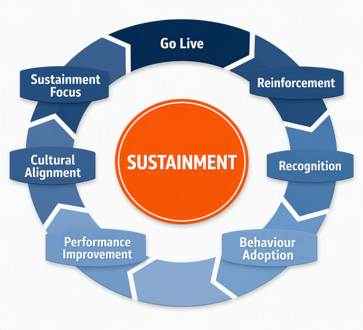
Launching a new system, process, or way of working is a significant milestone, but it is not the finish line. The real challenge begins after implementation, when organisations must ensure employees continue using and supporting the change over the long term. Successfully sustaining change requires deliberate reinforcement activities and meaningful employee recognition programmes that encourage desired behaviours and prevent a return to old habits.
Across all industries, leaders often discover that technical implementation is easier than embedding lasting behavioural change. While go-live marks the beginning of a new way of working, reinforcement and recognition help ensure that change becomes part of everyday operations and long-term organisational culture.
Why change often fades after go-live
Whilst many transformation programmes initially generate enthusiasm and strong engagement, as project teams disband and attention shifts to new priorities, adoption can begin to decline. Common challenges include:
Employees reverting to familiar processes
Reduced leadership visibility
Competing business priorities
Lack of ongoing communication
Insufficient recognition of success.
Without structured sustainment activities, organisations risk losing many of the benefits they worked hard to achieve. This is why successful change leaders focus on reinforcement long after implementation is complete.
Understanding the “refreeze” stage of Change Management
Kurt Lewin’s Change Management Model is one of the most recognised frameworks for sustaining organisational transformation. The model consists of three stages:
Unfreeze – Preparing people for change by creating awareness and readiness.
Change – Implementing new systems, processes, behaviours, or structures.
Refreeze – Embedding new behaviours so they become the normal way of working.
The refreeze stage is where sustainment occurs. Rather than viewing change as a temporary initiative, the organisation integrates new behaviours into everyday routines, performance measures, leadership expectations, and cultural norms. Without refreezing, employees often drift back to established habits, reducing the long-term value of the change programme.
Why reinforcement matters
Reinforcement is the process of continually encouraging and strengthening desired behaviours after implementation. People typically require ongoing support before new ways of working become routine. Effective reinforcement can include:
Leadership messaging
Coaching conversations
Refresher training
Performance reviews
Success stories
Peer support networks
Reinforcement serves as a reminder that the change remains important and that the organisation is committed to making it successful.
The power of employee recognition
One of the most effective ways to sustain change is through employee recognition. This encourages employees to continue demonstrating desired behaviours while signalling what the organisation values. People are more likely to repeat actions that are acknowledged and appreciated.
Recognition helps:
Increase engagement
Reinforce adoption
Strengthen morale
Encourage peer influence
Build organisational commitment
Most importantly, it transforms change from a programme requirement into a source of pride and achievement.
Recognition does not have to be expensive
Many organisations assume recognition requires significant financial rewards when in reality, simple and visible gestures often have the greatest impact. They could include:
Leader thank-you messages
Team acknowledgements
Employee spotlights
Success stories & internal awards
Professional development opportunities
Peer nominations
Recognition is most effective when it is timely, specific and linked directly to desired behaviours. For example, recognising an employee for helping colleagues adopt a new process reinforces collaboration and encourages others to follow their example.
Celebrating milestones and early wins
Celebrating progress helps maintain momentum and reminds employees that their efforts are making a difference, so many successful change programmes establish recognition milestones throughout the sustainment journey such as:
First month after go-live
90-day adoption review
Training completion targets
Process compliance achievements
Customer service improvements
Operational performance gains
Celebrating these achievements reinforces positive behaviours and demonstrates visible progress.
Building a long-term sustainment strategy
Successful organisations treat sustainment as an ongoing capability rather than a short-term activity. A robust sustainment strategy typically includes:
Adoption monitoring
Leadership engagement
Recognition programmes
Coaching support
Refresher training
Performance measurement
Continuous feedback
These elements work together to maintain momentum and protect the benefits achieved during implementation.
Successfully sustaining change requires more than delivering a successful go-live. Organisations must actively reinforce new behaviours and recognise employee contributions to ensure adoption becomes embedded over time. Through structured reinforcement, visible leadership support, milestone celebrations and meaningful employee recognition, organisations can strengthen engagement and prevent regression to old ways of working.
Irrespective of industry or sector, the organisations that achieve lasting transformation are those that continue investing in people after implementation. When reinforcement and recognition become part of everyday operations, change moves beyond a project milestone and becomes a sustainable organisational capability.
Do you need change expertise?
Implementing change and transformation is fundamentally about winning over people’s hearts and minds, for them to embrace new processes, technologies, and ways of working. A successful transformation is one that is fully adopted, as this is what ensures the realisation of the expected benefits outlined in the business case.
The path to full adoption starts with this strategic visioning exercise, laying the groundwork for the transformation ahead. This is also the initial step in a comprehensive change management approach. At Project One, our change experts have extensive experience in helping our customer through this process so if you’d like to learn more or just need a sounding board, please get in touch via theteam@projectone.com.

 How drama free is your change programme? take our free programme health check
 Our change and transformation Podcast Listen to our latest Podcast