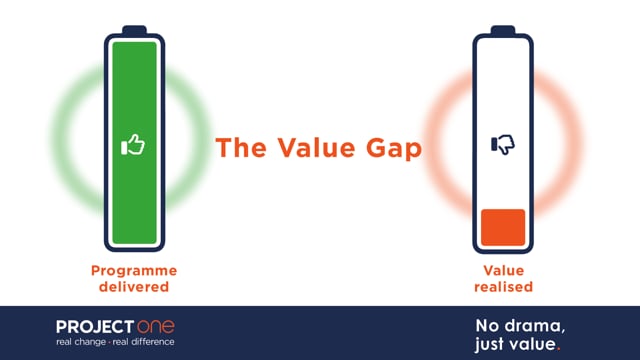
Many large transformations or change initiatives are unsuccessful because employees have not fully adopted the new ways of working or tools or systems implemented. This could be due to a lack of understanding of why employees should engage in the new ways of working or a lack of skills required or confidence to fully utilise the new tools or systems.
How to perform new tasks or do these tasks differently?
Where to go for additional support?
How success will be measured?
An effective training strategy ensures employees are sufficiently equipped with the knowledge and skills to engage with and adopt the new ways of working. Typically, it outlines the change training required for the skills development and organisational learning across the wider environment. This investment will build employee confidence and provide the best possibility of building lasting change capability.
People often have different learning styles, and a comprehensive training plan should include multiple training approaches and techniques to accommodate all learning needs, maximise engagement and behavioural change.
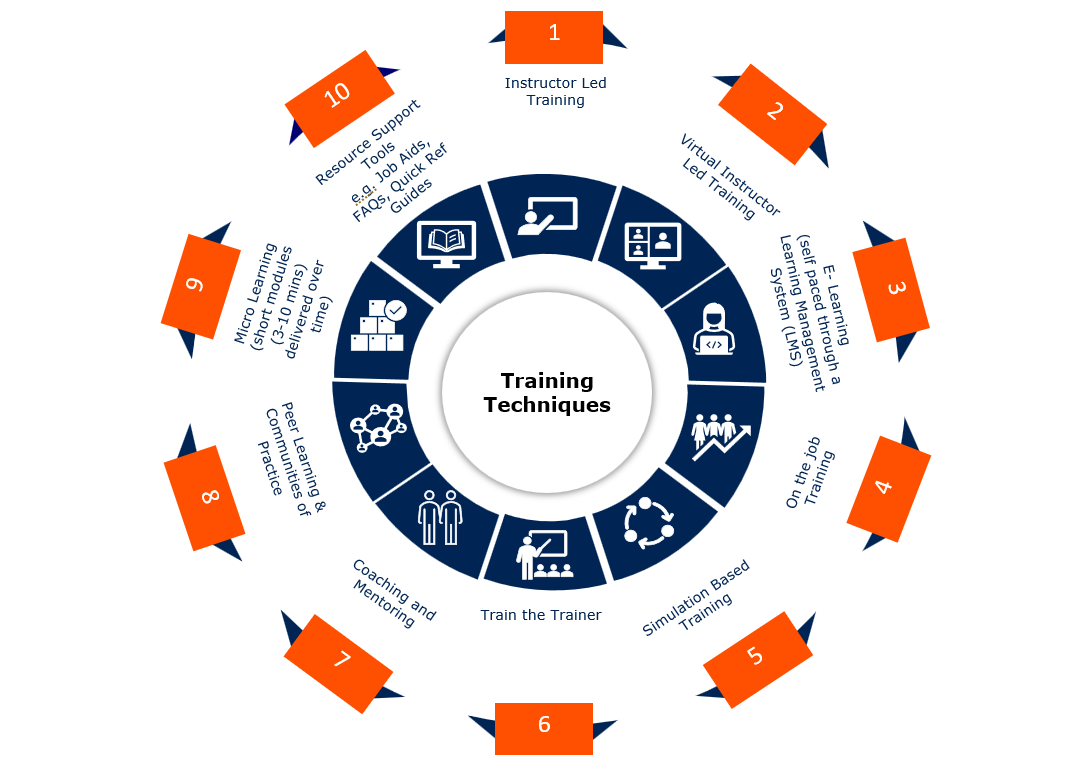
Training Techniques
Below are some highly recommended training techniques and associated benefits.
Training Technique
Best for
Advantages
1. Instructor Led Training
Complex changes
Interactive learning
Large groups requiring consistent messaging
Real time interaction
Hands-on Practice
Strong learning engagement
2. Virtual Instructor Led Training
Distributed workforces
Global teams
Remote or Hybrid environments
Reduced travel costs
Interactive breakout sessions
Scalable across locations
3. E- Learning (self paced through a Learning Management System (LMS)
Large audiences
Standardised content
Compliance training
Learn anytime, anywhere
Consistent delivery
Easy tracking and reporting
4. On the job training
Process changes
Operational environments
Practical experience
Higher retention
Immediate application
5. Simulation based training
High risk processes
Technology adoption
Safe learning environment
Improves readiness
Builds confidence before real implementation
6. Train the trainer
Large organisations
Multi-location deployments
Scalable
Builds internal capability
Creates local experts and ownership
7. Coaching and mentoring
Leadership transitions
Culture change initiatives
Personalised learning
Addresses resistance
Behaviour change
8. Peer Learning and Communities of Practice
Continuous change environments
Knowledge intensive organisations
Encourages collaboration
Shares best practice
Creates learning networks
Sustains adoption
9. Micro Learning (short modules (3-10 mins) delivered over time)
Busy employees
Just-in-time learning
Reinforcement
Easy to consume and revisit
High engagement
Supports learning in the floe of work
Reduces training fatigue
10. Resource Support Tools e.g. Job Aids, FAQs, Quick Ref Guides
Reinforcing training
Sustaining change
Supports employees in moment of need
Accessible at all times
Provides reassurance
Most large organisations benefit from applying a blended approach consisting of a mixture of instructor led training, e-learning supported by resource support tools and post go-live coaching and reinforcement.
How to Build Organisation Learning Capability
Building organisational learning capability involves creating an environment where people feel psychologically safe to “learn, test and trial” while improving their knowledge to achieve better business outcomes. It goes beyond training and focuses on making learning part of everyday work.
Key Components of Organisational Learning Capability are:
Create a Learning Culture – where employees are encouraged to:
ask questions and challenge existing ways of working
seek knowledge, be innovative and continuously learn
experiment without fear of failure or judgement
openly share and celebrate learning from both successes and failures.
Strengthen Leadership Commitment – where Leaders play a critical role in shaping and role modelling learning behaviours by:
actively participating in learning programmes
including learning goals in leadership objectives
allocating time and budget to invest in employee development
coaching employees in self-development
Establish and Strengthen Knowledge Management Practices – to enable critical knowledge to be captured, organised, and easily accessible, particularly when employees move roles. This may include:
developing knowledge repositories and intranet sites
documenting lessons learned from projects
Facilitated by using collaboration platforms such as Microsoft Teams, SharePoint and Viva Engage.
Encourage Knowledge Sharing and Collaboration – to enable employees to share and learn from their experiences, reducing duplication of effort and accelerating innovation by:
establishing communities of practice
creating internal expert networks
running lunch and learn sessions
running innovation forums
holding internal networking events
Build Learning into Daily Work – is most effective when integrated into everyday activities, rather than one-time training events. This may include examples such as:
stretch assignments
job rotations
shadowing and mentoring
cross functional team working
learning through projects
Develop Continuous Learning Pathways – by moving from one-time training events to ongoing development journeys, where employees have access to learning throughout their careers. Organisations may provide access to:
learning platforms
a blended learning approach including e-learning, instructor led training, microlearning
role based pathways and associated learning curricula
webinars
conferences
Professional qualifications
Industry events
Leverage Technology and Data – to make learning more accessible and scalable through tools such as:
Learning Management Systems (LMS)
Collaboration tools
Knowledge sharing platforms
AI-powered learning assistants
How to Measure Training Effectiveness
Learning capability should be measured alongside other operational performance metrics to assess how learning is improving business performance and may include:
Key Performance Indicators (KPIs) such as:
Training completion rates
Assessment scores
Skills proficiency levels
Business performance improvements
Adoption metrics such as:
Adoption of new processes
System or Tool usage
Employee engagement scores
Number and type of queries received through Early Life support
There are several tools available to support this measurement such as Power BI, Tableau or Microsoft Viva Insights and additional guidance on how to measure adoption.
The most successful organisations manage training as on-going capability building rather than a one-off event. By reinforcing learning over time and fostering a continuous improvement culture where employees are encouraged to learn through trial and error, organisations develop a workforce who become confident and better equipped to deliver future transformations and build lasting change capability.
Do you need Change Management expertise?
At Project One, our team of experienced change and programme management professionals brings hands-on expertise to drive complex transformation programmes. We combine leadership, governance, and delivery capability to help customers achieve sustainable business performance improvements faster and with greater certainty. If you are embarking on or already delivering a transformation programme and would like some guidance or just a sounding board, please get in touch via theteam@projectone.com.

 How drama free is your change programme? take our free programme health check
 Our change and transformation Podcast Listen to our latest Podcast