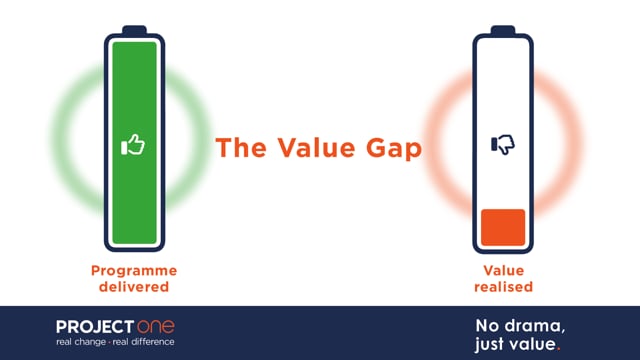
You may be looking at change the wrong way up – build it as a core capability as you are building your programme and use the benefits of agile to accelerate its impact.
As enterprises face increasing volumes of continuous change, many are adopting agile delivery models to improve flexibility, speed, and value realisation. While some organisations are extending agile practices across the whole enterprise by establishing squads, tribes, and product-based funding, most programmes of work are now being delivered via agile methods.
Regardless of the level of agile adoption, one thing is clear: all organisations need to improve how they manage continuous, people-centred change. Delivering faster is no longer enough. You must deliver sustainably, ensuring your people, processes, and operations are ready to adopt, own, and embed new ways of working at pace.
We have seen that an agile, embedded approach to change management will deliver more effective adoption of new ways of working and realise benefits of programmes more efficiently.
To effectively support delivery in agile scenarios, organisations must treat change management as a capability to be built and maintained within their operating model, not as a discrete or temporary activity.
The Case for Agile Change Management
We recommend structuring your enterprise approach to change management around five core principles:
- Build your agile change as a distinct capability – building a strategic competitive advantage.
- Give local operations leaders the ownership for the change.
- Incrementally plan out the change and align to your portfolio plans.
- Build change interventions into all stages of your agile approach; make it a core competence.
- Use the agile approaches of retrospectives and continuous improvement to consistently deliver world-class transformation.
Change as a Capability
In agile environments, change isn’t an end phase or separate project track; it’s a continuous operational capability.
Agile ways of working focus on rapid, incremental delivery, where solutions evolve iteratively based on feedback and learning. This requires change management to be equally iterative, flexible, and responsive. Rather than episodic change interventions, agile enterprises need the capacity to manage continuous, overlapping changes to ways of working, culture, systems, and processes.
Importantly, although this activity is iterative and continuous, it must remain strategically aligned and integrated with enterprise portfolio plans, programme increment plans, and release schedules. Just as enterprise agile frameworks (such as SAFe) use portfolio and programme-level planning to orchestrate technical delivery, the change management approach must be structured around those same cycles, ensuring operational readiness and adoption activities are timed and coordinated with delivery increments.
Embedding change as a capability means investing in people, tools, and practices that can support readiness and adoption as an ongoing business function, not just at programme level.
Change is Locally and Operationally Owned
Agile decentralises decision-making and accountability to operational teams and product owners. Change management must follow the same principle.
Operational leaders (acting as product owners within agile programmes) are accountable for managing the readiness, adoption, and operational impact of changes within their areas. Change Managers play a facilitative, coaching, and coordination role—supporting operational teams with impact assessments, readiness planning, and benefits tracking.
Governance and readiness management:
While operational teams own local change, governance must run through the entire delivery programme. A central Change Lead or Change Portfolio Manager ensures alignment across workstreams, maintains a master Change Roadmap, and facilitates escalation routes. Readiness reviews should be built into delivery checkpoints at sprint, increment, and programme levels, ensuring operational impacts are visible, managed, and mitigated.
Change is Incremental Aligned to Portfolio and Increment Plans
Just as agile delivery breaks down value delivery into small, manageable increments, so too should change.
Benefits of incremental change:
- Reduces operational risk and resistance by avoiding large, disruptive change events.
- Allows people to adopt new ways of working at a sustainable pace.
- Enables earlier tracking of benefits realisation as incremental changes are embedded.
Change Impact Assessments, Action Plans, and Benefits Realisation Plans should be updated incrementally, aligning with each sprint or delivery increment.
It is crucial to recognise that while change is delivered incrementally, it must be deliberately planned and coordinated through the organisation’s portfolio, increment, and release plans. This alignment ensures that local, incremental changes collectively contribute to enterprise-wide objectives, with a clear understanding of sequencing, dependencies, and operational impacts.
Agile delivery often focuses on value hypotheses—what outcomes a feature or process is expected to deliver. Change management must track not only delivery of functionality but adoption and benefits achieved, increment by increment.
Change is Integrated into All Stages
For agile change management to work, it must be integrated into every stage of the delivery lifecycle from initial design through to testing, release, and post-go-live.
How this works:
- Operational representatives should be actively involved in solution design, user story development, and prioritisation.
- Change impacts should be identified and assessed as stories are created.
- Change readiness and adoption plans should be updated during every sprint planning session.
- Testing should include operational readiness checks and stakeholder acceptance, not just system testing.
- Go-live should only proceed once operational readiness criteria are met.
Critically, one of the key planning drivers for both delivery and change is the capability of the organisation to accept and absorb change. Organisations must develop the ability to assess, manage, and forecast their operational capacity and capability to handle continuous change. This capacity management—knowing what change the business can accept and when—becomes a vital strategic capability for enterprise agility.
Operational E2E view and capacity management:
Operational managers must have an end-to-end view of what changes are coming and when. Managing the operational capacity to support ongoing involvement in agile squads, readiness planning, testing, training, and communications is essential. Change management plans must account for this ongoing demand on operational resources, balancing delivery velocity with business-as-usual responsibilities.
Continuously Reviewed and Improved
In agile organisations, retrospectives are a core practice and the same principle applies to change management.
Continuous feedback loops are essential:
- Regular change reviews should occur at sprint, increment, and programme levels.
- Readiness and adoption outcomes should be tracked as delivery progresses.
- Lessons learned from each increment should feed back into future change plans.
This iterative review cycle ensures the organisation continuously improves its approach to managing change, increasing its maturity as an agile enterprise.
Why building agile change capability makes sense
As enterprises shift to faster, more agile ways of working, the need for integrated, operationally led, and continuous change management has never been greater. Embedding change management into the everyday operating rhythm is how organisations make transformation sustainable and scalable.
By treating change as a capability, decentralising ownership, delivering in increments, integrating change at every stage, and continuously learning, organisations can confidently navigate the continuous, overlapping changes they face, while ensuring those changes are planned, sequenced, and absorbed in line with enterprise delivery plans and organisational capacity.
If you’d like to unlock the full potential of your business or just need a sounding board, contact us today to discover how we can help you achieve your goals.

 How drama free is your change programme? take our free programme health check
 Our change and transformation Podcast Listen to our latest Podcast